
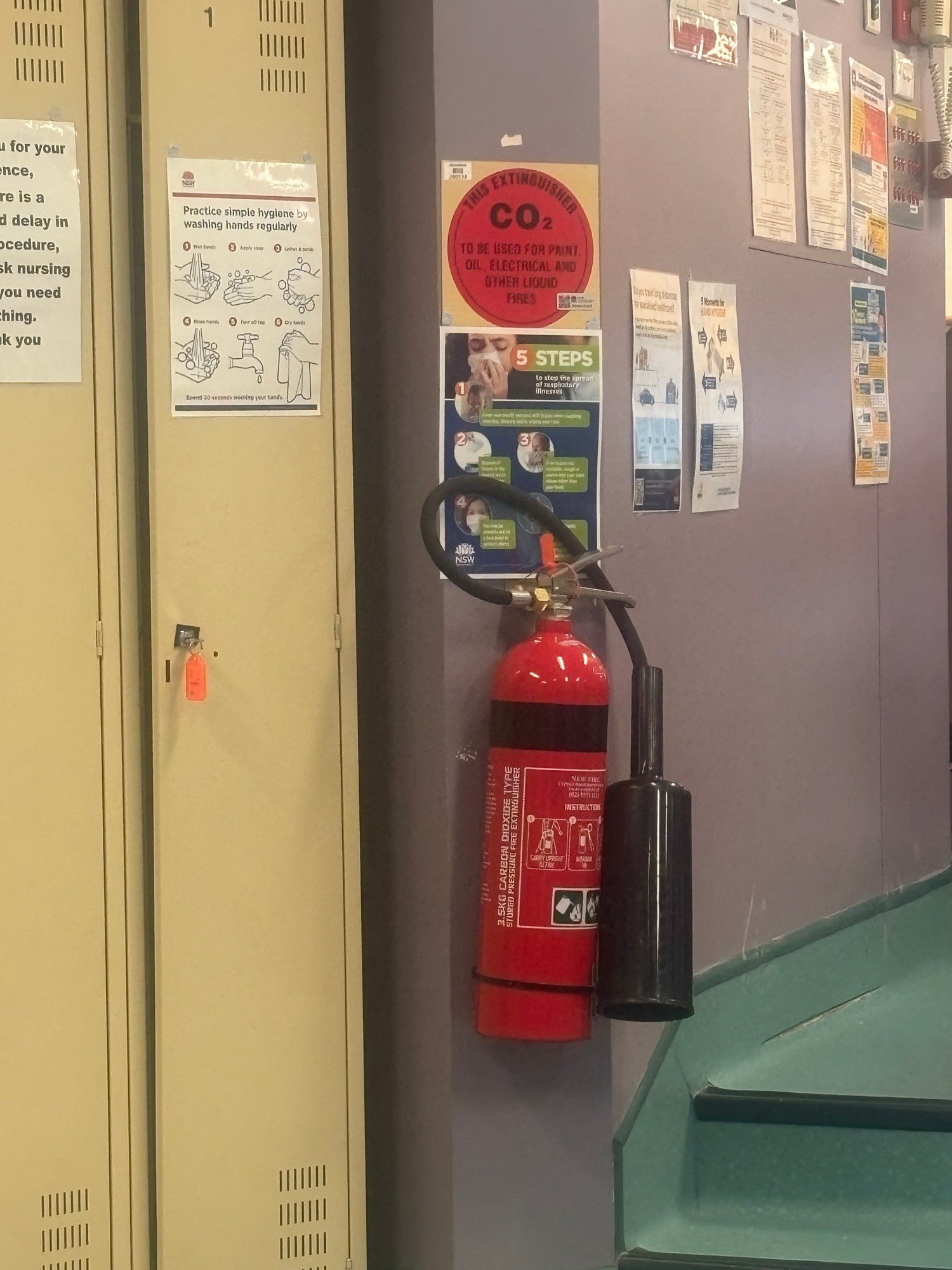
Fire extinguishers are everywhere—offices, schools, shopping centres, and even in our homes. We walk past them daily without a second thought, assuming they’ll be there if an emergency arises. But ask yourself this: if a fire broke out right now, would you know how to use one?
Most people assume that grabbing a fire extinguisher and spraying is enough, but using the wrong type or misusing one in an emergency can have disastrous consequences. Let’s break down everything you need to know about fire extinguishers—their types, colours, potential dangers, and why fire safety training is crucial for every workplace and home.
Understanding Fire Extinguishers: The Basics
A fire extinguisher is a portable device designed to control small fires before they spread. However, not all extinguishers work on all types of fires. In Australia, fire extinguishers are colour-coded to indicate what type of fire they are designed to fight. Using the wrong extinguisher can make a fire worse or put you in danger.
There are six main types of fire extinguishers, each suited to different fire risks:
1. Water (Red Label) – For wood, paper, and textile fires (Class A).
2. Foam (Blue Label) – For flammable liquids like petrol and oil (Class A & B).
3. Dry Powder (White Label) – General use for solid materials, flammable liquids, and electrical fires (Class A, B & E).
4. Carbon Dioxide – CO₂ (Black Label) – For electrical fires and flammable liquids (Class B & E).
5. Wet Chemical (Yellow Label) – For cooking oil and fat fires (Class F).
6. Vaporising Liquid (Ozone-Friendly Green Label) – Used in specialised environments for electrical and flammable liquid fires (Class B & E).
Each extinguisher is designed for a specific type of fire, and using the wrong one can cause more harm than good.
What Happens If You Use the Wrong Extinguisher?
Using the wrong fire extinguisher in an emergency can have serious consequences:
• Water on an electrical fire – Water conducts electricity, which could result in electrocution.
• CO₂ in a confined space – CO₂ displaces oxygen, which can cause you to lose consciousness.
• Foam or water on a cooking oil fire – These can cause the fire to spread rather than extinguish it.
• Dry powder in a small room – This can reduce visibility, making it hard to escape and dangerous to breathe.
Knowing which extinguisher to use and how to use it is critical in a fire emergency.
Before You Use a Fire Extinguisher: What to Consider
Before attempting to fight a fire, you must assess the situation. Here are some key considerations:
1. Is it safe to fight the fire?
• Only use a fire extinguisher if the fire is small and contained.
• Ensure you have a clear escape route.
• If the fire is spreading rapidly, evacuate and call emergency services.
2. Do you have the right extinguisher?
• Identify the type of fire (electrical, flammable liquid, cooking oil, etc.).
• Use the correct extinguisher to avoid making the fire worse.
3. Are you in a confined space?
• Using a CO₂ extinguisher in a small, enclosed room can displace oxygen, potentially causing suffocation.
• Dry powder extinguishers can create a dust cloud that impairs visibility.
4. Do you know how to use it?
• Most extinguishers follow the PASS method:
• Pull the pin.
• Aim at the base of the fire.
• Squeeze the handle.
• Sweep from side to side.
Training and practice are essential to ensure that, in a moment of panic, you don’t freeze or misuse the extinguisher.
Why Fire Safety Training is Essential
Knowing how to use a fire extinguisher can mean the difference between stopping a small fire and facing a full-blown emergency. Without proper training, people often hesitate, use the wrong extinguisher, or fail to extinguish the fire correctly.
Benefits of Fire Extinguisher Training:
• Confidence in an emergency – Panic leads to mistakes. Training ensures you know exactly what to do.
• Preventing unnecessary damage – Using the right extinguisher minimises harm to property.
• Ensuring workplace safety compliance – Australian workplaces must meet fire safety regulations, including proper extinguisher training.
Many businesses assume their staff will instinctively know what to do, but in an emergency, training makes all the difference.
Learn How to Use a Fire Extinguisher with GJS Business Solutions and Training
At GJS Business Solutions and Training, we offer CPPFES2005 – Demonstrate First Attack Firefighting Equipment training to equip you with the knowledge and hands-on experience to handle fire emergencies.
Our training covers:
✔ Identifying different fire types
✔ Selecting the correct fire extinguisher
✔ Safe and effective use of extinguishers
✔ Real-world fire scenarios
✔ Emergency evacuation procedures
Fire safety isn’t just about compliance—it’s about protecting lives and property. Investing in proper training ensures that your team is prepared to respond effectively when it matters most.
Take Action Today
Fire extinguishers are life-saving tools—but only if you know how to use them correctly. Don’t wait for an emergency to realise you’re unprepared.
Book a training session today with GJS Business Solutions and Training:
Be prepared. Stay safe. Know how to fight fire effectively.