
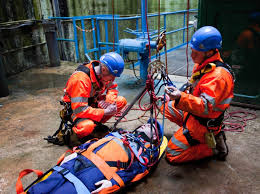
This course provides learners with the opportunity to gain experience in realistic confined space rescue operations across a range of scenarios. A confined space is determined by the hazards associated with a set of specific circumstances and not just because work is performed in a small space.
This unit of competency involves the skills and knowledge required to undertake rescues in confined spaces as a member of a single organisation or team involving multiple organisations. The unit is applicable to a range of confined space rescue situations undertaken by personnel from the emergency services, volunteer organisations and/or organisations where confined space work is performed. It provides the knowledge along with the practical training to operate a range of rescue equipment and techniques for the safe extraction of injured or ill persons from a confined space.
The skills in this course are applied in accordance with Commonwealth and State/Territory legislation, Australian/New Zealand standards and industry codes of practice. No licensing, legislative or certification requirements apply to this unit at the time of publication.
Individuals within the fire sector or who are completing this unit, contributing to the attainment of a fire qualification, must hold the pre-requisite units of: PUAFIR306 Identify, detect and monitor hazardous materials at an incident and PUASAR022 Participate in a rescue operation.
This comprehensive training covers:
This unit of competency involves the skills and knowledge required to undertake rescues in confined spaces as a member of a single organisation or team involving multiple organisations. The unit is applicable to a range of confined space rescue situations undertaken by personnel from the emergency services, volunteer organisations and/or organisations where confined space work is performed.
This course is ideal for:
Employees and facility occupants undertaking confined space work who may be involved with a rescue plan
Workplace emergency response team members
Members of emergency service organisations
A well-prepared response to confined space emergencies can prevent escalation, minimise risks, and ensure a swift and safe resolution. This course provides:
Practical, real-world training in responding to confined space emergencies
Instruction from experienced emergency response professionals
Hands-on exercises to reinforce early intervention procedures
A nationally recognised qualification upon successful completion
To successfully complete this course, participants must demonstrate competency in:
Respond to two (2) simulated scenarios to undertake confined space rescues demonstrating:
During the above, the candidate must:
Theory assessment – A written assessment consisting of multiple-choice and short answer questions. The student must complete all assessment questions.
Upon completion, participants will receive a Statement of Attainment, confirming their ability to respond to facility emergencies effectively and safely.
This training is available in different delivery formats to accommodate workplace needs:
Face-to-face training: Typically 10 hours, including practical exercises
Refresher Training: Typically 6 hours, including practical exercises
Enhance your emergency preparedness with our Undertake confined space rescue course. Enrol today to gain the confidence and skills needed to act quickly and effectively in emergency situations.
For more information or to book your training session, contact us now!
The following units will be included in your certificate:
Course durations can vary for multiple reasons, so the durations below are a guide.
| Refresher min. duration | 6 Hours |
| Blended min. duration | N/A |
| Face-to-face min. duration | 10 Hours |
| Online with face-to-face min. duration | N/A |
An individual undertaking this course with Allens Training Pty Ltd will need to demonstrate the following to be eligible for entry:
Online study: Students must have access to a computer, smartphone, tablet or other electronic devices with access to the internet to complete the online/ pre-course studies.
Please contact us if you cannot meet the Entry Requirements before enrolling.
An individual undertaking this course with Allens Training Pty Ltd will need to demonstrate the following to be eligible for entry:
*Safe Work Australia notes “Working in a confined space may impose physiological and psychological demands over and above those encountered in a normal working environment. Consideration should be given to a worker’s:
Code of Practice – Confined Spaces, December 2011 p 14.
Individuals within the fire sector or who are completing this unit, contributing to the attainment of a fire qualification, must hold the pre-requisite units of: PUAFIR306 Identify, detect and monitor hazardous materials at an incident and PUASAR022 Participate in a rescue operation.
Individuals undertaking this course will be expected to complete both written and practical assessment tasks.
Certificate provided on completion of both – nil recognition can be given if you fail to complete one or both tasks.
This certificate has an industry recommended renewal period of 24 months
Performance tasks and practical scenarios:
Respond to two (2) simulated scenarios to undertake confined space rescues demonstrating:
During the above, the candidate must:
Theory assessment – A written assessment consisting of multiple-choice and short answer questions. The student must complete all assessment questions.