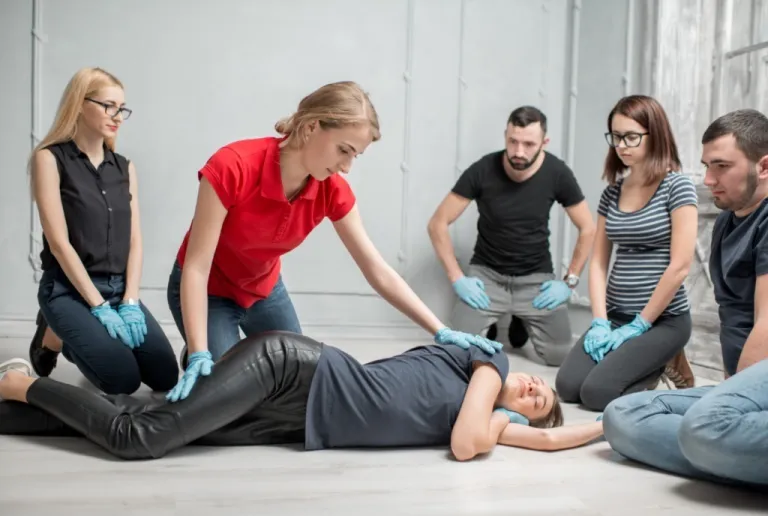
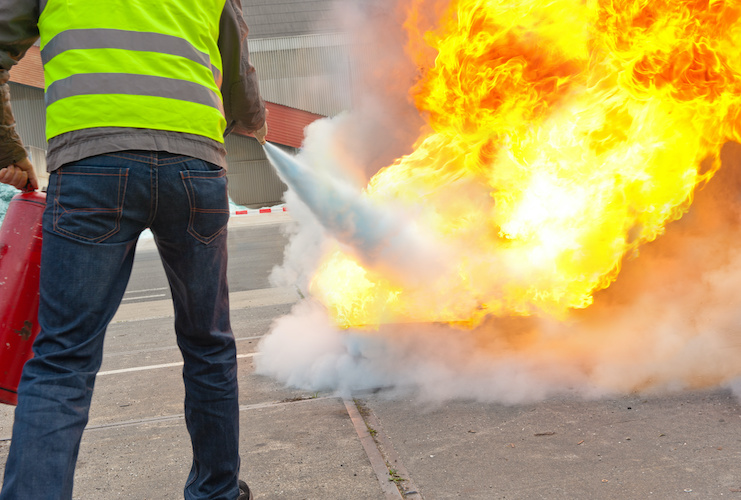
This course covers the skills and knowledge for preparing for emergency situations, identifying and assessing an emergency, safely confining emergencies, using initial response equipment, and reporting on the facility’s emergency response.
If you are an occupant of a facility who is required to have first attack firefighting skills for small emergencies, such as small fires that can be controlled using a fire extinguisher; chemical spills that can be controlled using facility personal protective clothing and equipment and a spill kit; or a vehicle accident where there is no significant injury or damage, then this course is a must for you.
All aspects of this course will be undertaken in accordance with legislative requirements, organisational policies and procedures and accepted safe practices including those covered in Australian Standard (AS) 3745 and AS4083 for facilities and occupants.
Occupants are people attending a facility on a permanent or temporary basis such as an employee, contractor, student or resident, but not a visitor or patient. A facility is a building, structure or workplace that is, or may be, occupied by people (occupants).
Participants in this course will also learn how to effectively:
This course is ideal for:
Emergency response personnel
Workplace emergency response team members
Any worker with firefighting responsibilities
A well-prepared first responder response to small emergencies can prevent escalation, minimise risks, and ensure a swift and safe resolution. This course provides:
Practical, real-world training in responding to small emergency
Instruction from experienced emergency response professionals
Hands-on exercises to reinforce early intervention procedures
A nationally recognised qualification upon successful completion
To successfully complete this course, participants must demonstrate competency in:
Recognising and reporting emergency situations within a facility
Responding effectively to emergency warnings and evacuation procedures
Maintaining personal and group safety in emergency conditions
Following workplace emergency procedures in compliance with regulations
Upon completion, participants will receive a Statement of Attainment
This training is available in different delivery formats to accommodate workplace needs:
Face-to-face training: Typically 3 hours, including practical exercises
Blended learning: Online theoretical components combined with in-person practical assessments
Enhance your emergency preparedness with our Respond to Facility Emergencies course. Enrol today to gain the confidence and skills needed to act quickly and effectively in emergency situations.
For more information or to book your training session, contact us now!
The following units will be included in your certificate:
Course durations can vary for multiple reasons, so the durations below are a guide.
| Refresher min. duration | N/A |
| Blended min. duration | N/A |
| Face-to-face min. duration | 3 Hours |
| Online with face-to-face min. duration | 30 minutes |
An individual undertaking this course with Allens Training Pty Ltd will need to demonstrate the following to be eligible for entry:
Participants must have the physical capacity to complete all practical demonstrations, such as being able to safely confine emergencies using initial response equipment.
Pre-course study: Students may be required to undertake online pre-course work prior to attending the face to face session depending on the course delivery mode.
Online study: Students must have access to a computer, smartphone, tablet or other electronic device with access to the internet to complete the online/pre-course studies.
Please contact us if you cannot meet the Entry Requirements before enrolling.
Individuals undertaking this course will be expected to complete both written and practical assessment tasks.
Certificate provided on completion of both – nil recognition can be given if you fail to complete one or both tasks.
This certificate does not require renewal however industry recommendation of 24 months
Performance tasks and practical scenarios:
Performance tasks:
Documentation:
Theory assessment: